

The Overlooked Systems That Decide Whether Your Emails Get Seen
Most email advice focuses on what an email says.
Subject lines. Design. Send times. Calls to action.
Those things matter. But they are not what decides whether your email is seen in the first place.
Those things matter. But they are not what decides whether your email is seen in the first place.
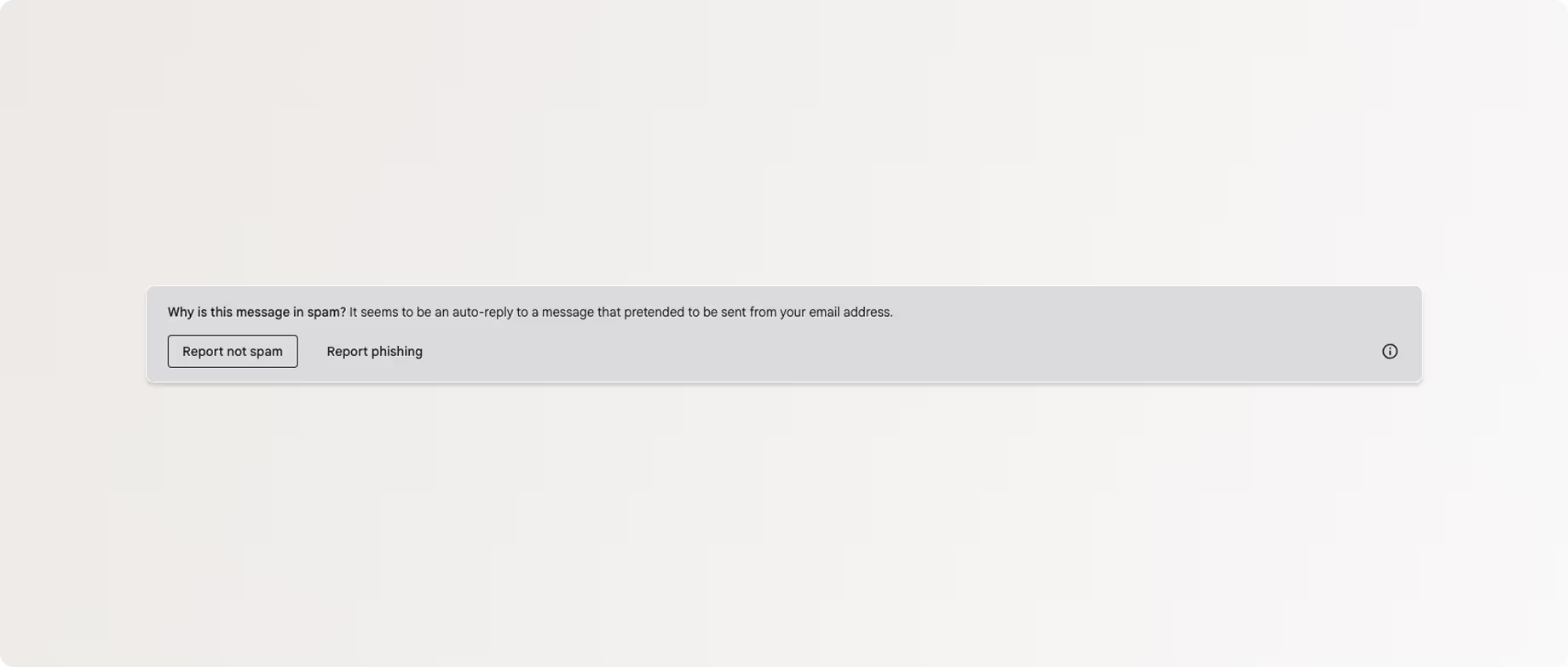
Inbox providers like Gmail and Outlook care far more about trust, consistency, and behaviour over time. Quiet systems running in the background determine if your emails land in the inbox, the spam folder, or nowhere at all.
This article looks at the less discussed parts of email marketing that quietly shape deliverability and long term performance, and how to improve them.
1.
Sender reputation and why inboxes keep score
Every sending domain and IP has a reputation.
Inbox providers maintain this reputation continuously. It is not fixed, and it is not something you earn once. It updates based on how recipients behave when they receive your emails.
Signals that influence sender reputation include:Opens and clicks over time
• Spam complaints
• Unsubscribes
• Bounce rates
• Whether emails are ignored or deleted without interaction
This reputation is also relative. You are effectively compared to other senders with similar volume and patterns. That is why new subscribers are often the first group affected when reputation dips. Inbox providers test cautiously when trust is uncertain.
This system exists for a simple reason. Spam was not solved by filters alone. It was solved by making reputation expensive to lose and slow to rebuild.
How to improve sender reputation:
• Send consistently rather than in large bursts
• Warm new domains and lists gradually
• Prioritise engaged subscribers when sending campaigns
• Accept that not every email should go to your full list
Reputation is built quietly. And it is lost quietly too.
2.
Deliverability is not guaranteed just because you hit send
Sending an email does not mean it is received.
Deliverability is the percentage of emails that actually reach the inbox. Not blocked. Not filtered. Not sent to spam.
Sender reputation feeds directly into deliverability, but basic technical setup is the baseline requirement.
At minimum, brands should:
• Send from a professional domain
• Authenticate their sending domain properly
The three most common authentication standards are:
SPF - This tells inbox providers which servers are allowed to send email on your behalf.
DKIM - This signs your emails so providers know the content was not altered in transit.
DMARC - This tells providers what to do if authentication fails and provides reporting.
These do not improve performance on their own. They prevent distrust. Without them, every send starts at a disadvantage.
Good systems remove friction quietly. This is one of them.
3.
Consistent sending cadence builds trust before content is even read
Frequency and cadence are often confused. They are not the same.
Inbox providers do not reward how often you send. They reward how predictable you are.
A brand that sends once a month, every month, is easier to trust than a brand that sends five emails in a week and then disappears for three months.
Inbox providers learn your behaviour patterns over time. Not just what you send, but when and how consistently you send it.
Irregular sending creates uncertainty. Sudden spikes in volume, long periods of silence followed by heavy activity, or erratic schedules are treated cautiously.
This does not mean you need to email more often.
It means whatever cadence you choose should be intentional and repeatable.
From a practical standpoint:
• Avoid sudden increases in sending volume
• Warm up before reactivating old lists
• Treat your sending rhythm as part of your reputation, not a scheduling detail
Consistency is not exciting. But it is stabilising. And inboxes value stability.
4.
Never look at your sender reputation data
Google Postmaster Tools is free and widely ignored.
For brands sending to Gmail users, it provides insight into:
• Domain reputation
• IP reputation
• Spam complaint rates
• Authentication issues
It does not fix problems. It shows you they exist before they become serious.
Without visibility, deliverability issues feel random. With visibility, patterns emerge.
If email is an important channel for your business, flying blind is unnecessary.
You can access it at:
postmaster.google.com
5.
Accessibility signals that quietly affect performance
Alt text exists first and foremost for accessibility.
Screen readers rely on it. Visually impaired recipients rely on it. That alone should be reason enough to use it consistently.
But inbox providers also use alt text as a signal of clarity and intent.
As inboxes increasingly rely on AI driven previews and summaries, alt text becomes more visible than many brands realise. When emails are image heavy, these systems often pull from alt text to generate summaries.
If an email is image only and lacks alt text, it can appear blank or meaningless in previews making it marked as spam.
Best practice:
• Add alt text to every meaningful image
• Leave decorative images empty
• Describe the image clearly rather than selling through it
Inclusivity and deliverability are not separate concerns. They often reinforce each other.
6.
List health is a long term asset, not a vanity metric
Inbox providers do not care how large your list is. They care how people behave when they receive your emails.
Continuing to email disengaged subscribers actively harms deliverability for engaged ones.
Healthy lists shrink. Unhealthy lists grow.
There is no universal rule for inactivity windows. A brand sending monthly might look back six emails. A brand sending frequently might look back thirty. Use context, not rigid rules.
One important nuance is to filter by both opens and clicks. Privacy tools make opens unreliable on their own.
When subscribers disengage, the solution is not to keep sending harder. It is to sunset respectfully.
A simple approach:
• One email checking if they still want to hear from you
•One final notice before removal
Deleting subscribers is not failure. It is maintenance.
7.
Quiet systems create visible results
Most of what determines email success happens before copy is written and before a campaign is scheduled.
Good email marketing is not about tricks. It is about steady trust building.
The brands that consistently reach the inbox rarely talk about deliverability. Their systems simply work.
And when systems work, emails get the chance to do what they were meant to do.
Be read. Be useful. Be trusted.
